How to create a fold-away study corner in a shared room
· Editorial team miaminewsjoe.com
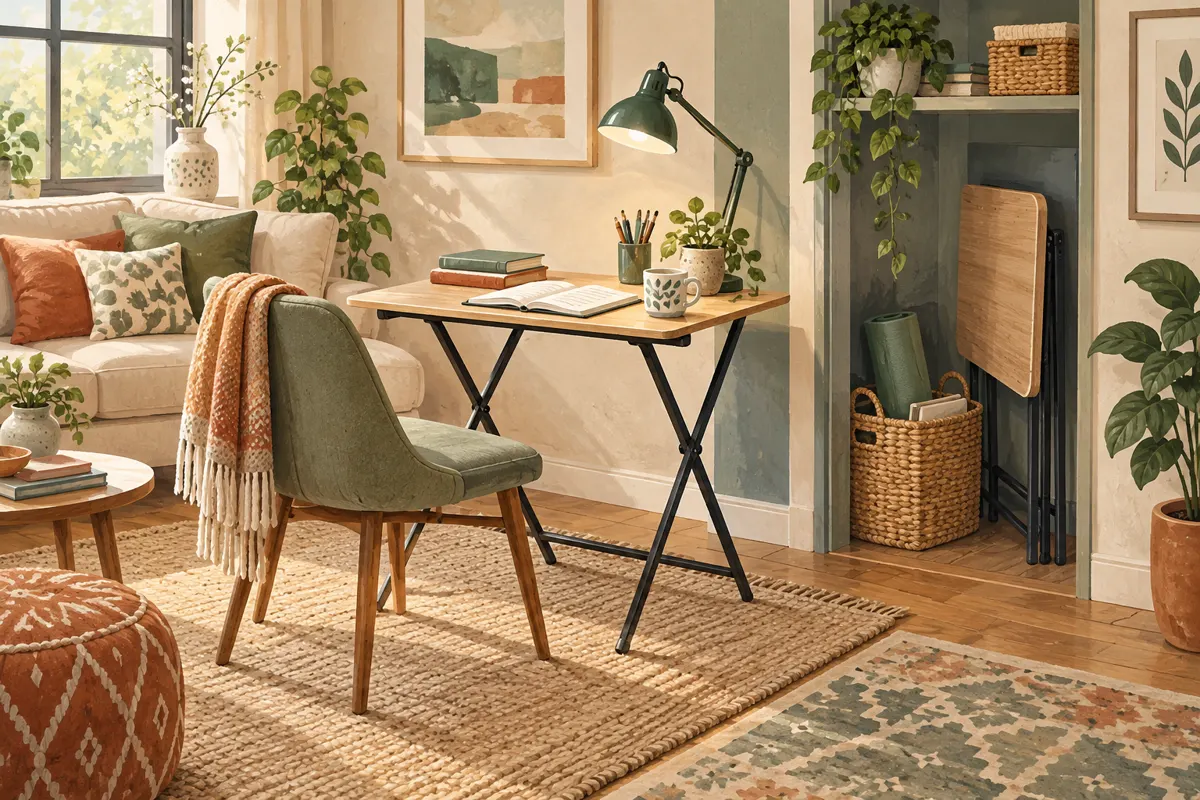
Create a fold-away study corner with a stable work surface, a chair, focused lighting and one portable container for supplies. Choose a spot that leaves the room usable for everyone, then give each item a storage place. The proposed arrangement below lets you set up for a study session and clear the space afterward without reorganizing the whole room.
Choose a corner that works for everyone
Start with the room’s everyday activities. Where do people walk, sit, watch television or open cupboards? Choose a study position that allows those activities to continue while your chair is pulled out. A quiet-looking corner is less useful if someone needs to pass behind you throughout the session.
Daylight can make the workspace more inviting, but you also need lighting for evening use. Keep enough surface space for your usual books, notebook or laptop instead of filling the corner with decorative objects.
- The chair can move back without blocking a doorway or shared route.
- You can reach your supplies without occupying someone else’s seat.
- Any charging cable can stay out of walking paths.
- The folded furniture has a specific storage spot nearby.
Choose a surface you can clear and store
The editorial proposal is to start with an existing table if one is available. A portable study kit can turn one end of a dining or multipurpose table into a temporary workspace. If that table is regularly occupied, consider a freestanding folding table that can be stored when the room needs its floor space back.
Check the usable area with your actual materials: open the book, place the notebook beside it and add the laptop if you use one. You should be able to write without balancing things on your lap. Pull up the intended chair and check that your knees fit underneath and your shoulders feel relaxed.
For folding furniture, follow the manufacturer’s instructions for opening, locking and loading it. Confirm that it stands securely before placing equipment on it. Plan where the chair goes afterward too; folding the table alone does not fully return the room to shared use.
Give the work surface its own light
An adjustable task lamp lets you direct light toward reading and writing. General room lighting can remain in use alongside it, so the study corner does not depend entirely on daylight or one overhead light.
As a proposed setup, place the lamp where your writing hand casts the least shadow over the page. Adjust its position if you see a bright reflection on a screen, and aim it away from other people’s faces. Keep the lamp base outside the main writing area.
Decide whether the lamp stays on a nearby shelf or travels with the study kit. Either arrangement should allow you to move it without stretching its cord across the room.
Keep everyday supplies in one portable kit
Baskets and organizers can keep stationery, cables and notebooks together, while less frequently used items stay elsewhere. Giving supplies a specific home also makes the workspace easier to reset.
- A notebook and the books needed for the current session.
- A small pencil case rather than loose stationery.
- A folder for unfinished worksheets and loose papers.
- A charger, if needed, with its cable gathered separately.
Choose a container you can carry comfortably when filled. Store it where retrieving it does not require moving several other objects. If multiple people study in the room, give each person a separate folder or kit so clearing the table does not mix up their work.
Repeat the same setup and pack-away routine
Agree with the other room users when the corner will be occupied and when it will be cleared. The proposed routine below keeps the changeover predictable.
- Open and secure the surface, position the chair and bring over the supply kit.
- Set the lamp, then take out only the materials for the first task.
- Before finishing, write down the next action in your notebook.
- Put loose papers in the folder and return supplies to the kit.
- Switch off the lamp, disconnect equipment as needed, clear the surface and store the furniture.
After using the arrangement, adjust whatever makes packing away awkward. An overflowing kit may need fewer supplies; a hard-to-reach storage spot may need changing. Keep any personal decoration small enough to travel with the kit, so it adds another item rather than another tidying task.