How to remove sand from beach gear without wasting water
· Editorial team miaminewsjoe.com
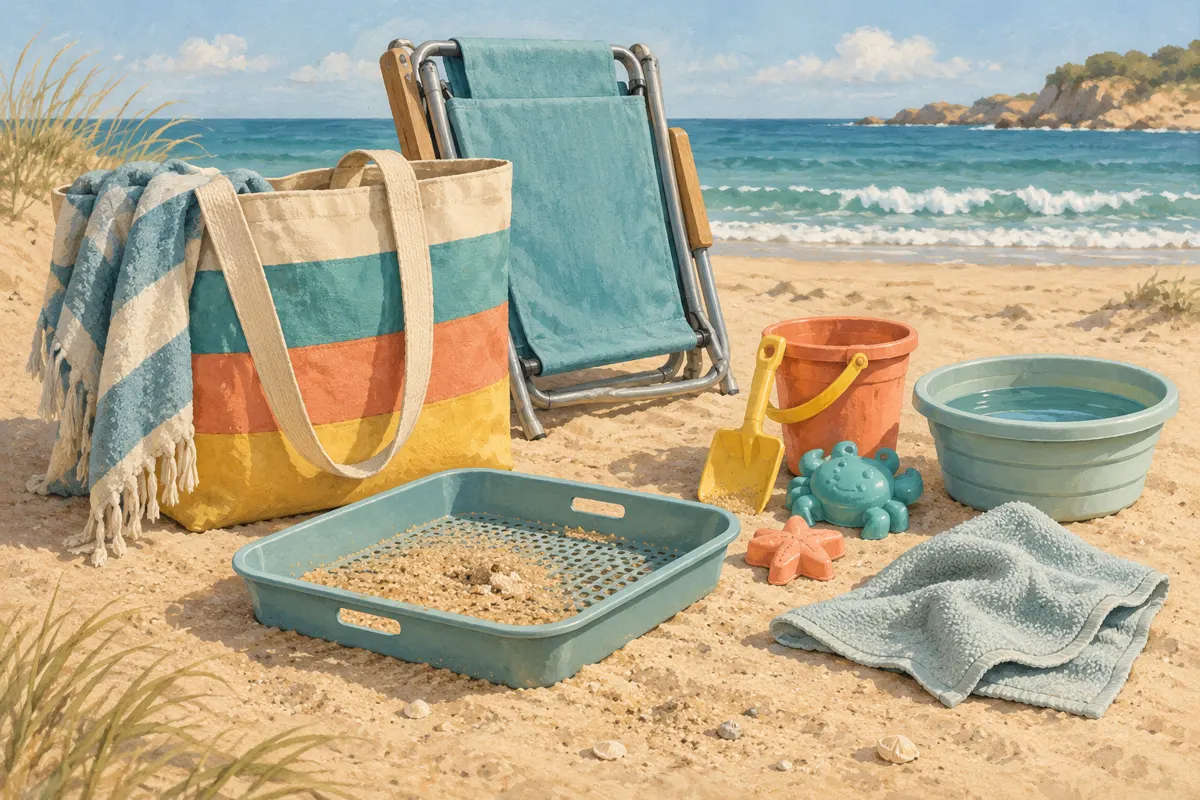
Remove loose sand before adding water: empty, shake, let damp gear dry, then brush it over a tray or washable mat. Use a damp cloth or a small, controlled rinse only for what remains. For households without an outdoor hose, the proposed routine below keeps cleanup manageable and helps keep sand out of household drains.
Shake off loose sand before packing
Start while you are still at the beach. Shake towels and mats away from other people, then brush loose grains from gear before putting it in the car. A mesh bag lets loose sand escape when shaken, although pockets and seams still need attention. Keep damp, sandy items separate from belongings you have already cleaned.
- Empty buckets and shake out shovels before packing them.
- Open chair folds and check feet, cup holders and fabric pockets.
- Empty bag pockets instead of shaking a full bag with valuables inside.
- Give towels several firm shakes while holding them by the corners.
Set up a contained cleanup spot at home
Our proposed home setup is a shallow tray or washable mat near the entrance, with enough space to unfold a chair. If you use a balcony, contain the sand so it cannot fall onto neighbors or wash into a drain. Indoors, work over the tray rather than directly in a bathtub or shower.
Spread damp items out and allow them to dry before brushing again. There is no useful fixed drying time: check whether grains release easily instead of sticking to the surface. Do not leave wet towels bundled inside a bag while waiting for the rest of the gear to dry.
Keep a reusable kit together: a soft hand brush, a small brush for seams, a washable cloth, a shallow basin and a dustpan. Use brushes gently and follow care instructions for coated fabrics or delicate surfaces. You do not need a specialized branded sand-removal product.
Clean bags, chairs and toys dry first
- Bags: remove everything, open every compartment and turn the bag upside down over the tray. Turn the lining outward if its construction allows it. Brush seams, zipper folds and pocket corners without forcing grains into the zipper.
- Chairs: unfold the chair fully. Brush the seat and back, then check stitching, hinges and the undersides of the feet. Open and close the chair slowly over the tray to release trapped grains; stop if a joint resists.
- Toys: tip out buckets, tap hollow items gently and brush grooves, handles and shovel edges. Inspect openings where sand may remain inside.
- Towels and mats: shake again once dry, then brush remaining patches gently. Remove loose sand before putting washable items in the laundry.
Repeat the dry pass where needed. Avoid forcing a brush into sealed parts or taking apart equipment unless the manufacturer provides instructions. Sand removal is only one part of care; salt residue or other dirt may still require washing.
Use water only where it helps
After brushing, wipe remaining dirty patches with a damp cloth. For washable plastic toys, use a small basin to loosen residue rather than keeping a faucet running. Lift each item out, inspect it and rinse only the spots that still need attention. Change dirty water when necessary.
Check the care label before wetting bag linings or chair fabric. If the manufacturer calls for a fresh-water rinse after beach use, follow that instruction after removing loose sand. Let cleaned gear dry fully before folding or storing it.
Keep collected sand out of drains
Sweep dry sand from the tray into a dustpan and place it in your household trash. Avoid tipping it into a sink, toilet, shower or street drain. Wipe the tray with a cloth to collect the last grains before washing it.
If rinse water contains sand, let it settle in the basin. Carefully pour off the water while leaving the sediment behind, then scoop or wipe the sediment into the trash. A drain strainer can catch larger debris, but do not rely on it to collect fine sand. Empty the cleanup tray and dry the kit so it is ready for the next beach trip.