How to set up a temporary kitchen during a renovation
· Editorial team miaminewsjoe.com
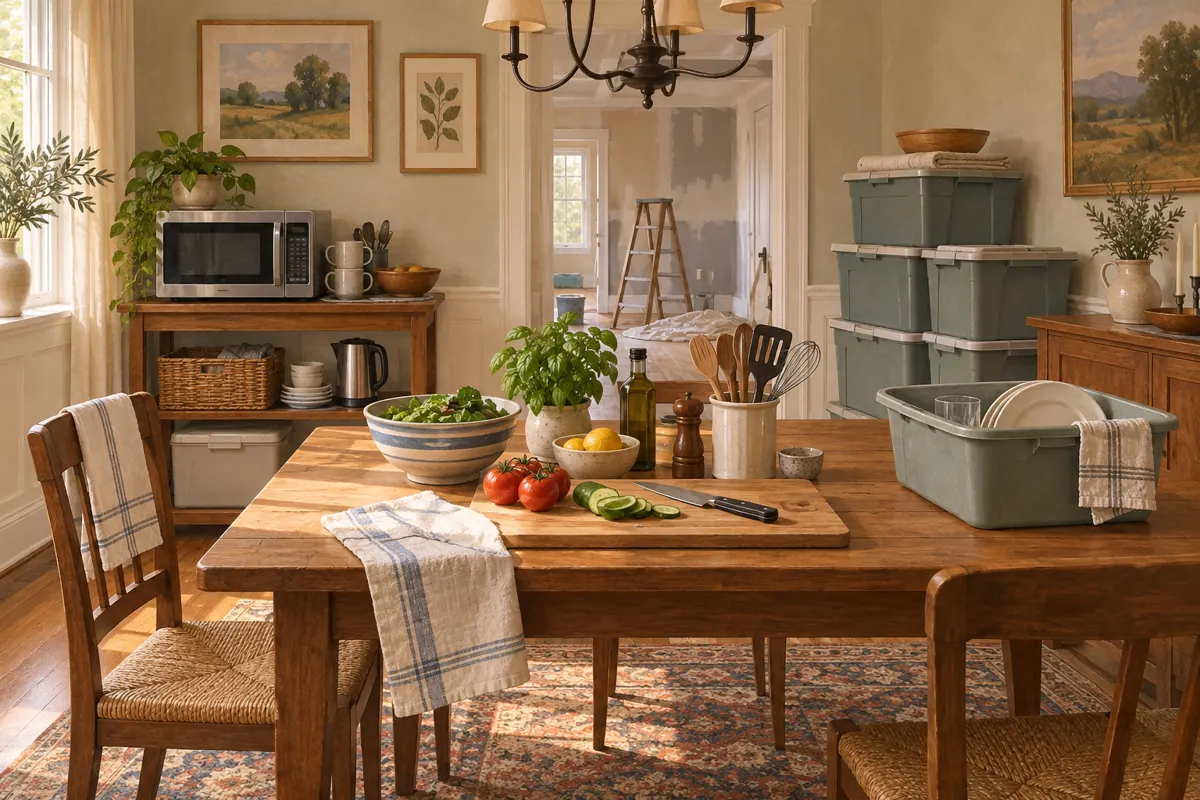
Set up your temporary kitchen outside the construction area with a clear work surface, a few cooking appliances, accessible food storage, and a planned place to wash dishes. Before demolition starts, unpack only what you need for everyday meals and check that you can reach water and the refrigerator without crossing the work zone.
Choose a spot that supports everyday meals
A dining room, spare room, or basement can serve as a temporary kitchen. Choose the location by how easily you can prepare food, get refrigerated ingredients, and carry dishes to water. A spacious room becomes less convenient if every meal requires several trips through construction.
Our proposed layout is simple: use one sturdy table for preparation, a separate suitable surface for appliances, and a shelf or cabinet for food and dishes. Leave room to set down groceries and serve a meal. If the dining table must also handle prep, keep supplies in a movable bin so you can clear it quickly.
- Confirm which rooms and routes will remain accessible with your contractor.
- Identify a working water source and a place to wash dishes.
- Check appliance placement, outlet requirements, and clearances against the manufacturers’ instructions.
- Keep the preparation area away from construction materials and household traffic.
Keep a small, practical cooking kit
Choose appliances around meals you already eat. A microwave can handle reheating; a toaster oven offers another way to prepare simple food; a portable electric cooktop lets you use a pan. You do not need every appliance at once. Start with the equipment you own and have suitable space to operate.
- One plate, bowl, cup, and set of cutlery per person.
- A cutting board, kitchen knife, and mixing bowl.
- A saucepan and skillet if you will use a cooktop.
- A spatula, serving spoon, and can opener.
- Food containers, dish towels, dish soap, and a washing brush.
Pack the remaining equipment in labeled boxes. Keep frequently used tools together, with knives stored securely. A limited kit makes it easier to find things and prevents the temporary counter from filling with equipment you rarely use.
Make food storage easy to reach and cover
Reduce your pantry before the renovation by using ingredients already on hand. Keep everyday staples in the temporary kitchen and pack less useful items separately. Group breakfast supplies, snacks, and meal ingredients so you can see what is available without searching through boxes.
Use cabinets or lidded containers to protect food, utensils, and clean dishes from renovation dust. A construction barrier does not guarantee that nearby surfaces stay clean. Wipe the preparation surface before using it, and keep cleaning supplies separate from food.
Plan refrigerator access before it is moved. If the main fridge stays elsewhere in the house, keep the route clear and collect ingredients for each meal in one trip. A second small refrigerator is an option when available, but first consider whether the existing refrigerator can meet your needs.
Set up washing before the first meal
Washing dishes can be the most awkward part of living without a kitchen. Decide where it will happen before demolition. An accessible utility sink may be useful; a bathroom sink needs more planning because space is limited. Keep a dedicated dishwashing basin and a clean drying area separate from bathroom fixtures.
- Scrape food scraps into the trash before carrying dishes away.
- Collect dishes in a washable bin that you can comfortably carry.
- Wash and rinse at your designated water source, keeping soap and a brush nearby.
- Dry dishes on a clean rack or mat, then return them to covered storage.
- Clean the basin and transport bin after use.
Plan meals around the setup you have
Before the kitchen closes, prepare and freeze familiar meals if you have freezer space. Choose portions that suit your household and containers compatible with your reheating appliance. During the renovation, favor meals with few ingredients and little washing: oatmeal, sandwiches, salads, reheated soup, or a simple one-pan dish.
Try the setup for a meal before demolition begins. Prepare food, eat, and wash everything using only your temporary supplies. This rehearsal can reveal a missing utensil or an awkward carrying route while you still have time to adjust. Afterward, keep the daily routine simple: clear the prep surface, put food away, and return clean dishes to their designated place.