How to make a small living room easy to switch into a workout space
· Editorial team miaminewsjoe.com
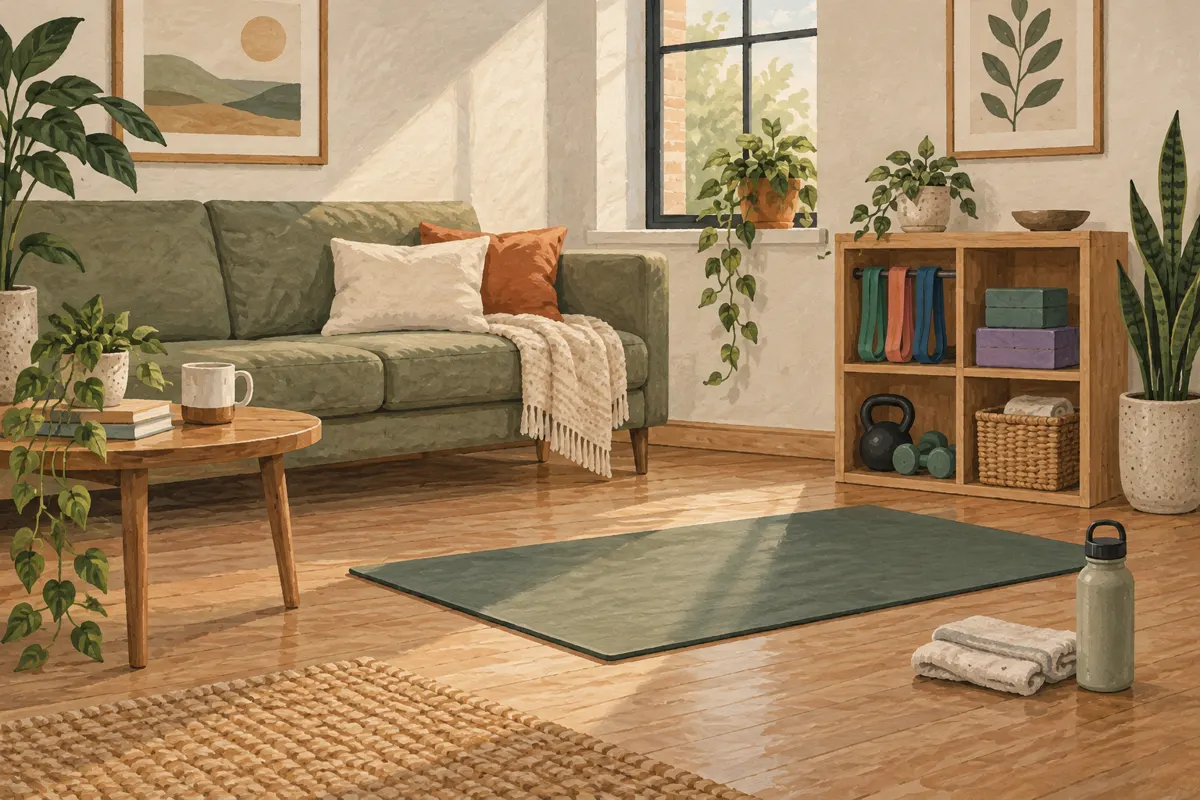
Make a small living room easy to switch into a workout space by choosing one clear exercise area, giving movable furniture a parking spot and storing your workout kit nearby. Start with the movements you actually do: a mat-sized gap may suit stretching, while standing exercises need clearance beyond the mat. The layout below is an editorial proposal you can adapt to your room and routine.
Choose the exercise area before rearranging furniture
Start with your usual workout rather than a list of equipment you might buy. The supplied small-space gym guide recommends planning around your main exercises and accounting for the room equipment requires. In a shared living room, that also means checking where your arms, legs and any weights will move.
- Lay out your mat, or identify the floor area you intend to use.
- Slowly walk through the positions in your planned routine without weights. Check standing, seated and floor-level clearance.
- Look for nearby table edges, lamps, shelves, ceiling fixtures and anything within reach of an extended arm or leg.
- Keep the route to the door clear, including when equipment is in use.
If a movement does not fit comfortably, choose a suitable alternative or use another space. A mat marks a useful starting area; it does not define the full clearance every exercise needs.
Give movable furniture a specific parking spot
An editorial proposal: keep the sofa in place and make the smaller pieces do the moving. A lightweight coffee table, nesting tables or a movable ottoman can make the switch manageable, provided you have somewhere to put them. Furniture that simply shifts into a doorway creates another obstacle.
- Choose a parking spot beside the sofa or against an unused wall, clear of walking routes.
- Keep the table surface simple so you do not have to relocate several loose objects before every session.
- Move furniture using a method suitable for its weight and your flooring; avoid dragging it across the room.
- If furniture has casters, secure it in its parked position so it cannot roll into the exercise area.
Try the arrangement with your existing furniture first. If clearing the floor requires moving several heavy pieces, reconsider which part of the room you use before buying anything.
Store a small workout kit close to the clear floor
Compact equipment makes a shared room easier to manage. The source identifies resistance bands, bodyweight exercises and adjustable weights as options for limited spaces. Choose equipment that serves your routine instead of filling every available storage gap.
An editorial proposal is to create one nearby storage station: a basket or cubby for light accessories, a place for the rolled mat and suitable storage for weights. Keep heavy equipment on a stable surface or purpose-built stand rated for its load. Do not assume a decorative shelf or storage ottoman can support it.
Give each item a fixed home that is easy to reach without shifting other belongings. Foldable machines still need space when opened, operating clearance and a practical storage route. Check those requirements before treating a folding design as the answer to a small room.
Account for flooring, noise and nearby objects
The source recommends considering floor protection and sound, particularly in apartments with neighbors below or beside you. Select a mat or protective surface appropriate for your exercises and floor. Check that it lies flat and stays in place before starting.
Padding does not make every activity suitable for the room. Set weights down with control, and consider movements without jumping where impact noise is a concern. Move loose rugs, cables and fragile objects out of the exercise area. Keep pets and children away from moving equipment and weights.
Use the same setup and reset sequence
An editorial proposal: use a repeatable sequence so each workout begins with a clear floor and ends with a usable living room.
- Park the movable furniture and remove loose obstacles.
- Place the mat and bring out only the equipment needed for that session.
- Check movement clearance and keep unused equipment outside it.
- Afterward, return equipment to storage, following its cleaning and drying instructions.
- Put the mat away and return furniture to its everyday position.
After using the arrangement, notice which step feels awkward. Move the storage closer, reduce loose accessories or change the furniture parking spot. Adjust the room around the routine you actually maintain.